






Gjør som tusenvis av andre bokelskere
Abonner på vårt nyhetsbrev og få rabatter og inspirasjon til din neste leseopplevelse.
Ved å abonnere godtar du vår personvernerklæring.Du kan når som helst melde deg av våre nyhetsbrev.

The sea ice surrounding Antarctica has increased in extent and concentration from the late 1970s, when satellite-based measurements began, until 2015. Although this increasing trend is modest, it is surprising given the overall warming of the global climate and the region. Indeed, climate models, which incorporate our best understanding of the processes affecting the region, generally simulate a decrease in sea ice. Moreover, sea ice in the Arctic has exhibited pronounced declines over the same period, consistent with global climate model simulations. For these reasons, the behavior of Antarctic sea ice has presented a conundrum for global climate change science. The National Academies of Sciences, Engineering, and Medicine held a workshop in January 2016, to bring together scientists with different sets of expertise and perspectives to further explore potential mechanisms driving the evolution of recent Antarctic sea ice variability and to discuss ways to advance understanding of Antarctic sea ice and its relationship to the broader ocean-climate system. This publication summarizes the presentations and discussions from the workshop.
"Hepatitis B and C cause most cases of hepatitis in the United States and the world. The two diseases account for about a million deaths a year and 78 percent of world's hepatocellular carcinoma and more than half of all fatal cirrhosis. In 2013 viral hepatitis, of which hepatitis B virus (HBV) and hepatitis C virus (HCV) are the most common types, surpassed HIV and AIDS to become the seventh leading cause of death worldwide. The world now has the tools to prevent hepatitis B and cure hepatitis C. Perfect vaccination could eradicate HBV, but it would take two generations at least. In the meantime, there is no cure for the millions of people already infected. Conversely, there is no vaccine for HCV, but new direct-acting antivirals can cure 95 percent of chronic infections, though these drugs are unlikely to reach all chronically-infected people anytime soon. This report, the second of two, builds off the conclusions of the first report and outlines a strategy for hepatitis reduction over time and specific actions to achieve them"--
"Advances in genetics and genomics are transforming medical practice, resulting in a dramatic growth of genetic testing in the health care system. The rapid development of new technologies, however, has also brought challenges, including the need for rigorous evaluation of the validity and utility of genetic tests, questions regarding the best ways to incorporate them into medical practice, and how to weigh their cost against potential short- and long-term benefits. As the availability of genetic tests increases so do concerns about the achievement of meaningful improvements in clinical outcomes, costs of testing, and the potential for accentuating medical care inequality. Given the rapid pace in the development of genetic tests and new testing technologies, An Evidence framework for genetic testing seeks to advance the development of an adequate evidence base for genetic tests to improve patient care and treatment. Additionally, this report recommends a framework for decision-making regarding the use of genetic tests in clinical care"--
"The National Academies of Sciences, Engineering and Medicine Workshop on Approaches to the Development of Character, July 26 and 27, 2016, National Academy of Sciences Building, Lecture Room, 2101 Constitution Avenue, NW, Washington, DC"--Page 85.
"Communities provide the context in which programs, principles, and policies are implemented. Their needs dictate the kinds of programs that community organizers and advocates, program developers and implementers, and researchers will bring to bear on a problem. Their characteristics help determine whether a program will succeed or fail. The detailed workings of programs cannot be separated from the communities in which they are embedded. Communities also represent the front line in addressing many behavioral health conditions experienced by children, adolescents, young adults, and their families. Given the importance of communities in shaping the health and well being of young people, the National Academies of Sciences, Engineering, and Medicine held a workshop in June 2016, to examine the implementation of evidence- based prevention by communities. Participants examined questions related to scaling up, managing, and sustaining science in communities. This publication summarizes the presentations and discussions from the workshop"--Publisher's description.
"A report of the National Academies of Sciences, Engineering, Medicine."
"A report of the National Academies of Sciences, Engineering, Medicine."
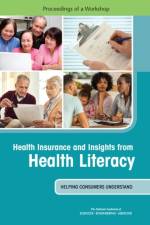
Since the passage of the Patient Protection and Affordable Care Act (ACA), health care reform has created major changes in the U.S. health care system. The ACA has brought millions of people into the system who had no previous access, and many of these newly enrolled individuals have had limited experience navigating the complex and complicated U.S. health system. In July 2016 the National Academies of Sciences, Engineering, and Medicine convened a public workshop to examine health insurance through the lens of health literacy, focusing on literacy related barriers to information and coverage as well as on possible solutions. Participants discussed the role of health literacy in accessing health care and remaining in treatment; delivery and financing system reforms that affect organizational health literacy; and quality and equity considerations. This publication summarizes the presentations and discussions from the workshop.
"The State of the Science in the Field of Regenerative Medicine: Challenges of and Opportunities for Cellular Therapies: a Workshop, October 13, 2016, National Academy of Sciences Building, Room 125. 2101 Constitution Avenue, NW, Washington, DC 20148"--Page 87.
"A report of the National Academies of Sciences, Engineering, Medicine."
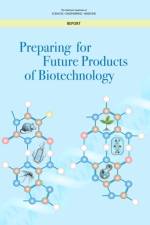
"Between 1973 and 2016, the ways to manipulate DNA to endow new characteristics in an organism (that is, biotechnology) have advanced, enabling the development of products that were not previously possible. What will the likely future products of biotechnology be over the next 5-10 years? What scientific capabilities, tools, and/or expertise may be needed by the regulatory agencies to ensure they make efficient and sound evaluations of the likely future products of biotechnology? Preparing for Future Products of Biotechnology analyzes the future landscape of biotechnology products and seeks to inform forthcoming policy making. This report identifies potential new risks and frameworks for risk assessment and areas in which the risks or lack of risks relating to the products of biotechnology are well understood"--Publisher's description.
The concept of utilizing big data to enable scientific discovery has generated tremendous excitement and investment from both private and public sectors over the past decade, and expectations continue to grow. Using big data analytics to identify complex patterns hidden inside volumes of data that have never been combined could accelerate the rate of scientific discovery and lead to the development of beneficial technologies and products. However, producing actionable scientific knowledge from such large, complex data sets requires statistical models that produce reliable inferences (NRC, 2013). Without careful consideration of the suitability of both available data and the statistical models applied, analysis of big data may result in misleading correlations and false discoveries, which can potentially undermine confidence in scientific research if the results are not reproducible. In June 2016 the National Academies of Sciences, Engineering, and Medicine convened a workshop to examine critical challenges and opportunities in performing scientific inference reliably when working with big data. Participants explored new methodologic developments that hold significant promise and potential research program areas for the future. This publication summarizes the presentations and discussions from the workshop.
"Effectively educating children who are learning English as their second language is a national challenge with consequences both for individuals and for American society. Despite their potential, many young English learners are struggling to meet the requirements for academic success, a difficulty that jeopardizes their prospects for success in post-secondary education and in the workforce. A committee of the National Academies of Sciences, Engineering, and Medicine examined how evidence relevant to the development of English learners can inform policies and practices that can result in better educational outcomes for these young people. The committee's report, Promoting the Educational Success of Children and Youth Learning English: Promising Futures examines what research evidence reveals about learning English from early childhood through high school, identifies effective practices for educators to use, and recommends steps policy makers can take to support high-quality educational outcomes for children and youth who are learning English"--Provided by publisher.
"A consensus study report of the National Academies of Sciences, Engineering, Medicine."
Most countries in the world use the International System of Units (also known as the metric system) for radiation measurements. The United States still uses a mix of SI and conventional units for radiation measurements, which means radiation professionals in the U.S. need to understand and make conversions between the two systems. Participants at this workshop discussed the need for the U.S. to adopt the SI, and, by doing so, standardize internationally the units for radiation measurements.
"A report of the National Academies of Sciences, Engineering, Medicine."
"Countering violent extremism consists of various prevention and intervention approaches to increase the resilience of communities and individuals to radicalization toward violent extremism, to provide nonviolent avenues for expressing grievances, and to educate communities about the threat of recruitment and radicalization to violence. To explore the application of health approaches in community-level strategies to countering violent extremism and radicalization, the National Academies of Sciences, Engineering, and Medicine held a public workshop in September 2016. Participants explored the evolving threat of violent extremism and radicalization within communities across America, traditional versus health-centered approaches to countering violent extremism and radicalization, and opportunities for cross-sector and interdisciplinary collaboration and learning among domestic and international stakeholders and organizations. This publication summarizes the presentations and discussions from the workshop"--Publisher's description.
"The volume and complexity of information about individual patients is greatly increasing with use of electronic records and personal devices. Potential effects on medical product development in the context of this wealth of real-world data could be numerous and varied, ranging from the ability to determine both large-scale and patient-specific effects of treatments to the ability to assess how therapeutics affect patients' lives through measurement of lifestyle changes. In October 2016, the National Academies of Sciences, Engineering, and Medicine held a workshop to facilitate dialogue among stakeholders about the opportunities and challenges for incorporating real-world evidence into all stages in the process for the generation and evaluation of therapeutics. Participants explored unmet stakeholder needs and opportunities to generate new kinds of evidence that meet those needs. This publication summarizes the presentations and discussions from the workshop"--
Military operations produce a great deal of trash in an environment where standard waste management practices may be subordinated to more pressing concerns. As a result, ground forces have long relied on incineration in open-air pits as a means of getting rid of refuse. Concerns over possible adverse effects of exposure to smoke from trash burning in the theater were first expressed in the wake of the 1990-1991 Gulf War and stimulated a series of studies that indicated that exposures to smoke from oil-well fires and from other combustion sources, including waste burning, were stressors for troops. In January 2013, Congress directed the Department of Veterans Affairs (VA) to establish and maintain a registry for service members who may have been exposed to toxic airborne chemicals and fumes generated by open burn pits. Assessment of the Department of Veterans Affairs Airborne Hazards and Open Burn Pit Registry analyzes the initial months of data collected by the registry and offers recommendations on ways to improve the instrument and best use the information it collects. This report assesses the effectiveness of the VA's information gathering efforts and provides recommendations for addressing the future medical needs of the affected groups, and provides recommendations on collecting, maintaining, and monitoring information collected by the VA's Airborne Hazards and Open Burn Pit Registry.
The National Academies of Sciences, Engineering, and Medicine's Army Research Laboratory Technical Assessment Board (ARLTAB) provides biennial assessments of the scientific and technical quality of the research, development, and analysis programs at the Army Research Laboratory (ARL), focusing on ballistics sciences, human sciences, information sciences, materials sciences, and mechanical sciences. This biennial report summarizes the findings of the ARLTAB from the reviews conducted by the panels in 2015 and 2016 and subsumes the 2015-2016 interim report.
The U.S. Global Change Research Program (USGCRP) is an interagency program, established by the Global Change Research Act (GCRA) of 1990, mandated by Congress to "assist the Nation and the world to understand, assess, predict, and respond to human-induced and natural processes of global change". Since the USGCRP began, scientific understanding of global change has increased and the information needs of the nation have changed dramatically. A better understanding of what is changing and why can help decision makers in the public and private sectors cope with ongoing change. Accomplishments of the U.S. Global Change Research Program highlights the growth of global change science in the quarter century that the USGCRP has been in existence, and documents some of its contributions to that growth through its primary functions of interagency planning and coordination, and of synthesis of research and practice to inform decision making.
Genome editing is a powerful new tool for making precise alterations to an organism's genetic material. Recent scientific advances have made genome editing more efficient, precise, and flexible than ever before. These advances have spurred an explosion of interest from around the globe in the possible ways in which genome editing can improve human health. The speed at which these technologies are being developed and applied has led many policymakers and stakeholders to express concern about whether appropriate systems are in place to govern these technologies and how and when the public should be engaged in these decisions.
Federal guidance on nutrition and diet is intended to reflect the state of the science and deliver the most reliable recommendations possible according to the best available evidence. This guidance, updated and presented every 5 years in the Dietary Guidelines for Americans (DGA), serves as the basis for all federal nutrition policies and nutrition assistance programs, as well as nutrition education programs. Despite the use of the guidelines over the past 30 years, recent challenges prompted Congress to question the process by which food and nutrition guidance is developed. This report assesses the process used to develop the guidelines; it does not evaluate the substance or use of the guidelines. As part of an overall, comprehensive review of the process to update the DGA, this first report seeks to discover how the advisory committee selection process can be improved to provide more transparency, eliminate bias, and include committee members with a range of viewpoints for the purpose of informing the 2020 cycle.
At the request of the Advisory Committee for Geosciences of the National Science Foundation (NSF), a review of the Geospace Section of the NSF Division of Atmospheric and Geospace Sciences was undertaken in 2015. The Portfolio Review Committee was charged with reviewing the portfolio of facilities, research programs, and activities funded by Geospace Section and to recommend critical capabilities and the balance of investments needed to enable the science program articulated in the 2013 NRC decadal survey Solar and Space Physics: A Science for a Technological Society. The Portfolio Review Committee's report Investments in Critical Capabilities for Geospace Science 2016 to 2025 (ICCGS) was accepted by the Advisory Committee for Geosciences in April 2016. Assessment of the National Science Foundation's 2015 Geospace Portfolio Review provides an independent assessment of the ICCGS report. This publication assesses how well the ICCGS provides a clear set of findings, conclusions, and recommendations for Geospace Section that align with the science priorities of the NRC decadal survey, and adequately take into account issues such as the current budget outlook and the science needs of the community. Additionally, this study makes recommendations focused on options and considerations for NSF's implementation of the ICCGS recommendations.
Both the Food and Drug Administration (FDA) and the National Institute for Occupational Safety and Health (NIOSH) have responsibilities for evaluating and regulating respiratory protective devices ("respirators") for health care workers. Respirators protect the user from respiratory hazards by either removing contaminants from the air (air-purifying respirators) or by supplying clean air from another source (air-supplying respirators). Respirators that are used in workplaces in the United States must be approved by NIOSH and meet standards and test results specified by regulation. Respirators used by health care workers are air-purifying respirators that generally fall into three types: (1) disposable particulate filtering facepiece respirators (also termed N95s); (2) elastomeric respirators, also known as reusable respirators because they use a replaceable filter; or (3) powered air-purifying air respirators. To provide input to NIOSH and FDA and to discuss potential next steps to integrate the two agencies' processes to certify and approve N95 respirators for use in health care settings, a workshop was held by the National Academies of Sciences, Engineering, and Medicine in August 2016. The workshop was focused on exploring the strengths and limitations of several current test methods for N95 respirators as well as identifying ongoing research and research needs. This publication summarizes the presentations and discussions from the workshop.
The United States has long recognized that the nation's prosperity and security depend on how we address challenges of disasters, poverty, famine, and disease around the world. The U.S. Agency for International Development (USAID) has played a vital role in promoting U.S. national and international interests by advancing strategies for employing science, technology, and innovation to respond to global challenges. The focus by USAID on science, technology, and innovation is critical to improve development outcomes. At the core of this progress is the engagement of science institutions and other innovative enterprises and their commitment to work in partnership with USAID to research, test, and scale solutions. The Role of Science, Technology, Innovation, and Partnerships in the Future of USAID provides an assessment and advice on the current and future role for science, technology, and innovation in assistance programs at USAID and on the role of partnerships in the public and private sectors to expand impact. This report examines challenges and opportunities for USAID in expanding the utilization of science, technology, and innovation in development assistance; assesses how USAID has deployed science, technology, and innovation; and recommends priority areas for improvement going forward in partnership with others.
Note: This is the French translation of Recent Fertility Trends in Sub-Saharan Africa. Fertility rates and population growth influence economic development. The marked declines in fertility seen in some developing nations have been accompanied by slowing population growth, which in turn provided a window of opportunity for rapid economic growth. For many sub-Saharan African nations, this window has not yet opened because fertility rates have not declined as rapidly there as elsewhere. Fertility rates in many sub-Saharan African countries are high: the total rate for the region is estimated to be 5.1 births per woman, and rates that had begun to decline in many countries in the region have stalled. High rates of fertility in these countries are likely to contribute to continued rapid population growth: the United Nations projects that the region's population will increase by 1.2 billion by 2050, the highest growth among the regions for which there are projections. In June 2015, the Committee on Population organized a workshop to explore fertility trends and the factors that have influenced them. The workshop committee was asked to explore history and trends related to fertility, proximate determinants and other influences, the status and impact of family planning programs, and prospects for further reducing fertility rates. This study will help donors, researchers, and policy makers better understand the factors that may explain the slow pace of fertility decline in this region, and develop methods to improve family planning in sub-Saharan Africa.
"On June 16, 2016, the Roundtable on Population Health Improvement held a workshop at the Lutheran Church of the Good Shepherd in Brooklyn, New York, to explore the influence of trauma and violence on communities. The workshop highlighted examples of community-based organizations using trauma-informed approaches to treat violence and build safe and healthy communities. Presentations showcased examples that can serve as models in different sectors and communities and shared lessons learned. This publication summarizes the presentation and discussion of the event"--Publisher's description.
"The National Academies of Sciences, Engineering, Medicine."
The social cost of carbon (SC-CO2) is an economic metric intended to provide a comprehensive estimate of the net damages - that is, the monetized value of the net impacts, both negative and positive - from the global climate change that results from a small (1-metric ton) increase in carbon-dioxide (CO2) emissions. Under Executive Orders regarding regulatory impact analysis and as required by a court ruling, the U.S. government has since 2008 used estimates of the SC-CO2 in federal rulemakings to value the costs and benefits associated with changes in CO2 emissions. In 2010, the Interagency Working Group on the Social Cost of Greenhouse Gases (IWG) developed a methodology for estimating the SC-CO2 across a range of assumptions about future socioeconomic and physical earth systems. Valuing Climate Changes examines potential approaches, along with their relative merits and challenges, for a comprehensive update to the current methodology. This publication also recommends near- and longer-term research priorities to ensure that the SC- CO2 estimates reflect the best available science.
Abonner på vårt nyhetsbrev og få rabatter og inspirasjon til din neste leseopplevelse.
Ved å abonnere godtar du vår personvernerklæring.