

Gjør som tusenvis av andre bokelskere
Abonner på vårt nyhetsbrev og få rabatter og inspirasjon til din neste leseopplevelse.
Ved å abonnere godtar du vår personvernerklæring.Du kan når som helst melde deg av våre nyhetsbrev.

Foremost among the biographies that Maurice Collis wrote during his wide-ranging literary career is Siamese White - an account of the career of Samuel White of Bath who, during the reign of James II, was appointed by the King of Siam as a mandarin of that country.
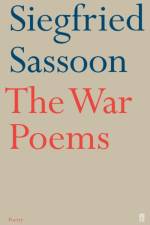
Siegfried Sassoon is one of the First World War poets whose poetry has defined a generation. He published most of his war poetry in The Old Huntsman (1917) and Counter-Attack (1918). Chronologically ordered, the poems in this collection act as a timeline for the war, bringing to life the extraordinary experiences of soldiers in that conflict.
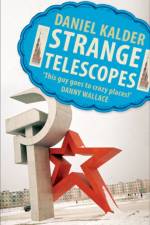
When Daniel Kalder, acclaimed author of Lost Cosmonaut, descended into the sewers of Moscow in pursuit of the mythical lost city of tramps, he didn't realise that he was embarking on a bizarre, year-long odyssey that would lead him thousands of miles across Russia to the Arctic Circle.
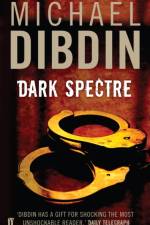
What is it that binds together a series of violent murders across America and the long-lost Secret of the Templars?The killings always take place in the home, usually in broad daylight, in towns and cities all over America.
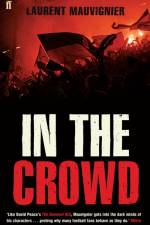
and Liverpool supporter Geoff Andrewson, travelling with his brothers. As these four groups of characters cross paths, and as the excitement of the build-up gives way to horrific tragedy, their lives and relationships are changed forever.
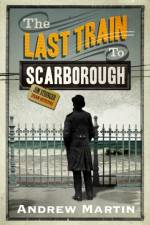
One night, in a private boarding house in Scarborough, a railwayman vanishes, leaving his belongings behind... It is the eve of the Great War, and Jim Stringer, railway detective, is uneasy about his next assignment. And when Jim encounters the seductive and beautiful Amanda Rickerby a whole new personal danger enters Jim's life...
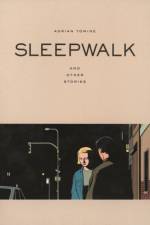
An old woman returns alone to the spot where as a young girl she used to meet her lover on his daily lunch break. A young guy misses his flight and returns to observe a kind of alternate version of his own life, one from which he seems to have vanished.
A collection of misanthropic scribblings that tackles the issues ranging from the misery of nightclubs to the death of Michael Jackson, making room for Sir Alan Sugar, potato crisps, global financial meltdown, conspiracy theories and Hole in the Wall along the way.
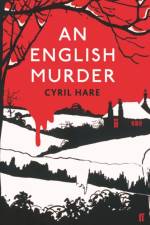
An English Murder (1951) was the sixth crime novel by 'Cyril Hare', nom de plume of Alfred Gordon Clark and one of the best-loved names in English 'Golden Age' crime writing.
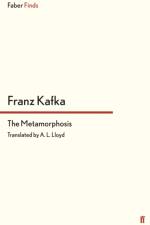
The story itself, Kafka's most famous, hardly needs describing - a travelling salesman, Gregor Samsa, wakes up one morning to find he has been transformed into an enormous bug - but Faber Finds is offering something rare, the very first English translation which has been out of print for over sixty years.
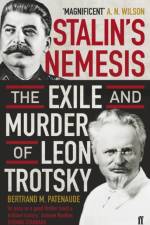
Outside of the villa, Mexican communists tried to storm the house and kill the man they regarded as a traitor, the Trotskys' sons were being persecuted and killed in Europe, and in Moscow, Stalin personally ordered his secret police to kill his fiercest left-wing critic - at any cost.
In Cumbria 30 years later, a landscape artist - and admirer of the Italian recluse - finds himself trapped in the extreme terrain that has made him famous.
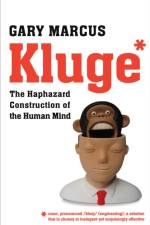
A 'kluge' is an engineering term for a makeshift solution, an inelegant construction that somehow works. This is Gary Marcus's analogy for the way the human mind has evolved. Arguing against a whole tradition that praises our human minds as the most perfect result of evolution, Marcus shows how imperfect and ill-adapted our brains really are.
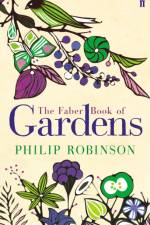
The poetic appreciations of gardens by Andrew Marvell and John Keats sit alongside the horticultural passions of Frances Hodgson Burnett and the mythic power of gardens as described by Charlotte Bronte and William Blake.
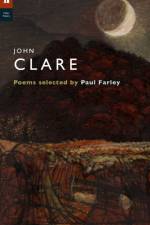
John Clare (1793-1864), the 'peasant poet', worked as an agricultural labourer in Northamptonshire until a deterioration in his mental health saw him committed to an insane asylum.
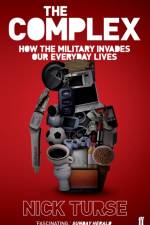
The Pentagon works with Hollywood to develop new robot weapons systems, and encourages Hollywood to glorify and sanitise military violence.
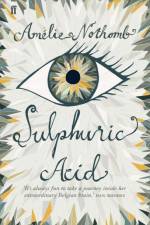
Sulphuric Acid tells the story of a reality TV death camp, which has become the nation's obsession - an amoral spectacle played out through the media. It is a blackly funny and shocking satire on the modern predilection for reality television and celebrity, in which the audience at home develops a taste for blood.
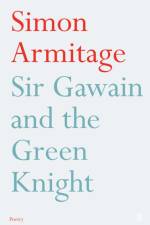
When the mysterious Green Knight arrives unbidden at the Round Table one Christmas, only Gawain is brave enough to take up his challenge.
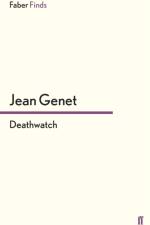
Deathwatch, Jean Genet's earliest, shortest and most formally straightforward play, was first performed in Paris in 1949. It retains an intense power and makes an excellent introduction to his later dramas - The Maids, The Balcony, The Blacks, The Screens.
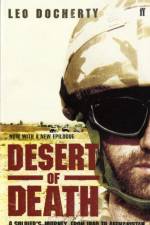
FOR THE FIRST TIME, A BRITISH SOLDIER RIPS THE LID OFF OUR CURRENT INVOLVEMENT IN IRAQ AND AFGHANISTAN. Does for the British military what Jarhead did for the US.
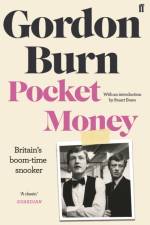
Following the 1985 final between Dennis Taylor and Steve Davis, Britain found itself in the grip of a new sporting obsession. In one corner was Barry Hearn and his Romford Mafia - Davis, Taylor and Griffiths - and in the other were the bad boys - Higgins, White and Knowles - threatening the game's good name, and its earning potential.
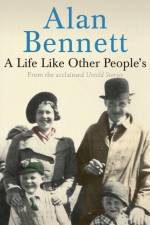
Alan Bennett's A Life Like Other People's is a poignant family memoir offering a portrait of his parents' marriage and recalling his Leeds childhood, Christmases with Grandma Peel, and the lives, loves and deaths of his unforgettable aunties Kathleen and Myra.
Whether outwardly elemental in their address, or more personal in their direction, these poems - to the rain and the sea, to his young sons or beloved friends - never shy from their inquiry into truth and lie, embracing everything in scope from the rangy narrative to the tiny renku.
Meanwhile, George's mother is about to marry Dr Vic, who besides being possess by an almost royal obliviousness, may even have voted for George W Bush.
Newcastle-upon-Tyne, Autumn 1996, and things can only get better - or so believes the Reverend John Gore bound for the North-East after a decade's absence, charged with the mission of 'planting' a new church in the deprived West End of town.
In this series, a contemporary poet selects and introduces a poet of the past.
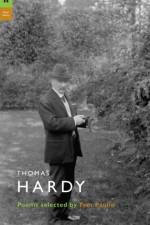
Thomas Hardy (1840-1928) was born in Dorset. He left school at sixteen to work as an apprentice for an architect who specialized in church restoration. He made his reputation as a novelist, and it wasn't until after the publication of his last novel, The Well-beloved, in 1897, that he dedicated himself to writing poetry.
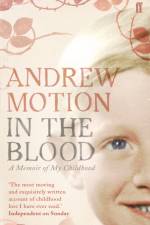
In the Blood is Andrew Motion's beautifully written memoir of growing up in post-war England - an unforgettable evocation of family life, school life and country life.
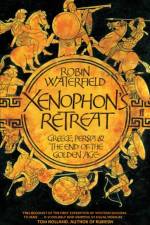
It is 401 BC. In battle at Cunaxa on the River Euphrates, the Persian king Artaxerxes II defeats a challenge to his throne by his brother Cyrus, the Younger. Among the slain of Cyrus's troops are a contingent of Greek mercenaries. In the wake of the defeat, Xenophon is elected a general and must lead the men on a fraught journey back to Greece.
Abonner på vårt nyhetsbrev og få rabatter og inspirasjon til din neste leseopplevelse.
Ved å abonnere godtar du vår personvernerklæring.